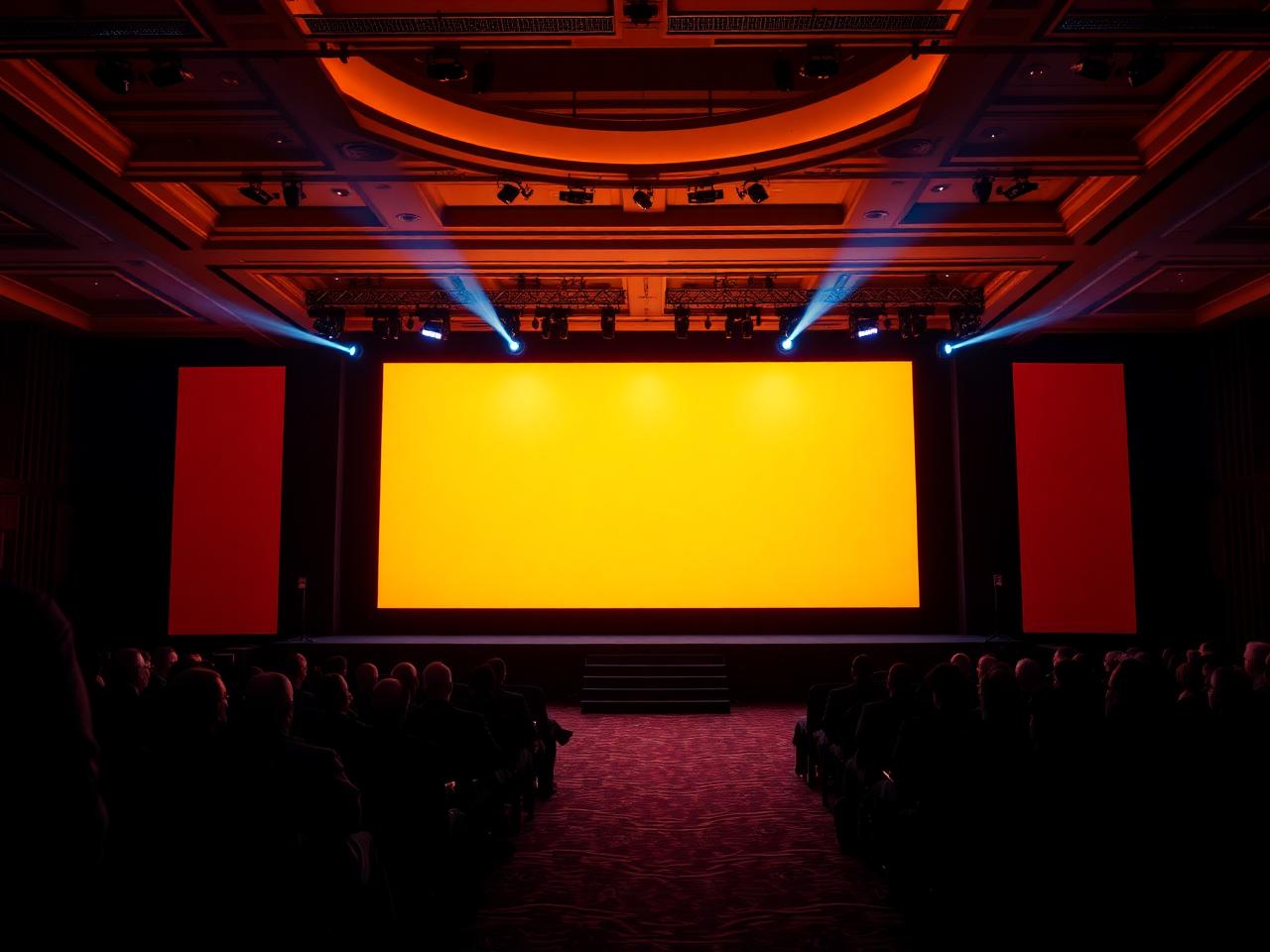
Corporate Events / Keynotes
Keynote & General Session Production
Broadcast-clean LED, IMAG and audio with prompt, confidence monitors and every cue on timecode — so the person on stage only has to be good at talking.
The general session is the room your company gets judged in. It's also the room with the most moving parts: a wide LED wall, live cameras, a dozen decks from a dozen presenters, walk-on music, video packages, an awards segment and a stream — all of it hanging on transitions that either land together or don't.
California Creative Studios produces main stages end to end: LED and video, IMAG cameras, staging and scenic, lighting, audio and RF coordination, teleprompter and confidence monitors, a staffed speaker-ready room and a show-caller running the whole script on timecode. One accountable team, one point of contact.
It's the main-stage specialization within ourcorporate event productionpractice. If your program also has breakout rooms, an expo floor and multi-day resets around this stage, that'sconference production— same crew, wider scope.
From a 200-seat exec forum to a 5,000-seat plenary with a global simulcast, the same senior crew scales to fit — in Los Angeles, across California, in Las Vegas and on the road.
At a glance
- Best for
- Keynotes · Plenaries · Exec forums
- Includes
- LED, IMAG, prompt & show-calling
- Where
- LA-based — California, Las Vegas & on tour
What we produce
Everything upstage of the presenter.
Wide LED & Scenic
A main stage built to the room's sightlines — LED width, pitch and height chosen for the back row and the camera, not the render.
IMAG & Camera Package
Image magnification that keeps a presenter readable from row forty, with camera positions planned into the stage design.
Redundant Playback
Two playback machines and a switcher, mirrored decks and a video safety. A crashed laptop stops nothing.
Teleprompter & Confidence
Downstage prompt, confidence monitors and a presenter clock so speakers can see their words, their slides and their time.
Speaker-Ready Room
A staffed room where decks get checked, converted, versioned and locked before they ever reach the stage.
RF & Mic Coordination
Coordinated frequencies for lavs, handhelds, in-ears and comms in venues full of competing RF.
Walk-On & Timecode
Music, lighting and video hitting together on the walk-on, the transition and the close — every time.
Stream & Capture
Redundant encoding, captions and clean session recordings for the remote audience and the on-demand library.
What we bring
The whole production, in-house.
Why CCS
Protect the person on stage.
Presenters are the fragile part
The gear rarely fails; the run of show does, when a speaker gets a deck they haven't seen or a clock they can't read. Speaker-ready rooms, prompt, confidence monitors and real rehearsal time exist to protect the person on stage.
Everything critical has a second one
Two playback machines, mirrored decks, a video safety, a spare mic element on the presenter and a backup RF channel already coordinated. Redundancy is in the base build, not an upsell.
Cues run on timecode
Walk-on music, the lighting look, the video sting and the LED content are locked together and called from one script, so transitions land on the beat instead of nearly.
Built to be filmed
Stage lighting levels, LED refresh rate and shutter sync are set for the cameras as well as the eye, so the recording is usable the moment the session ends.
How it runs
From scope to strike.
Scope
Room, audience, run of show, speaker list and stream plan turned into a costed production plan.
Design
Stage, LED, lighting and camera plot previz'd and approved — sightlines checked from the worst seat in the room.
Rehearse
Deck checks in the speaker-ready room, tech rehearsal, then full run-throughs with the actual presenters.
Show
Call the show, run every cue on timecode, hold the schedule and strike clean.
Where we produce
Keynote production near you.
FAQ
Keynote production, answered.
What does keynote production involve?
It's the technical production behind a main-stage session — LED and video, IMAG cameras, stage and scenic, lighting, audio and RF, teleprompter and confidence monitors, presentation playback, and a show-caller running the cues — plus the rehearsal process that gets presenters comfortable before an audience is in the room.
What's the difference between a keynote and a general session?
In practice they share a stage and a crew. A keynote is usually one speaker delivering the headline message; a general session is the wider plenary block — the keynote plus the awards, the exec panel, the video packages and the transitions. We build one main stage that serves both, which is why they're produced together rather than as separate scopes.
Do you provide teleprompter and confidence monitors?
Yes — downstage prompt for scripted delivery, confidence monitors so presenters can see their current and next slide without turning around, and a presenter clock or countdown so they can manage their own time. All of it operated by crew, not left to the speaker.
What happens if a presenter's laptop or slides fail on stage?
Nothing the audience notices. Decks are collected, converted and versioned in a speaker-ready room ahead of time, then run from two playback machines through a switcher with a mirrored copy. If a machine drops, the operator cuts to the backup mid-slide. Presenters who insist on their own laptop get a tested hardwired path and a duplicate deck on our system as a safety.
Can you handle IMAG and stream the session at the same time?
Yes. The camera package feeds both the in-room screens and the stream from one switched program, with redundant encoding and captions on the stream side and clean ISO records kept for post. The remote audience sees the same show as the room.
How much does general session production cost?
It scales with room size, LED width, camera count, speaker count and whether you're streaming. Send your venue, date, audience size and run of show and a producer will come back within one business day with a scope and budget.
Book this service
Request a keynote quote.
Send the basics and a producer will come back within one business day with scope, crew and pricing.